Safe Meetup Tips for Local Pallet Part Exchanges
By Editorial Team ·
On this page
- Why In-Person Pallet Part Exchanges Need a Safety Plan
- Choosing a Safe, Public Meetup Location
- Confirming Details Before You Leave Home
- Pallet Inspection Checklist for the Meetup
- Verifying Items Before a Local Trade Is Final
- Lifting, Moving, and Loading Safely at the Exchange
- Your In-Person Exchange Safety Checklist and Next Step
- Frequently Asked Questions
Quick Summary
The safest pallet part exchanges happen in a busy, well-lit public place during business hours, after every detail is confirmed in writing. Inspect the pallet carefully before accepting it, check the stringers, blocks and bottom deck as well as the top, and lift with your legs while wearing gloves.
- Meet in a large retail parking lot during the day, near an entrance or staffed counter.
- Confirm the date, spot, part details, condition and trade terms in writing before leaving home.
- Agree on a cutoff of 15-20 minutes for lateness, then the other side may leave.
- Inspect deck boards, stringers or blocks, fasteners, and bottom deck, and photograph any damage.
- Lift with your legs, use gloves and closed-toe shoes, and ask for help or use a dolly for heavy pallets.
Why In-Person Pallet Part Exchanges Need a Safety Plan
Last Updated: November 10, 2026
Pallet part exchanges are one of the most practical ways for resellers to finish a set. Individual sellers often meet in person to trade the pallet pieces they're missing. A safe meetup starts with a plan, not luck.
Most of these trades are small and friendly. But a meetup brings together two strangers, a heavy object, and often a vehicle. That mix needs a few clear rules before anyone leaves home.
Here is what a safe plan covers:
- Where you meet and when
- What you confirm before the day
- How you inspect the pallet before accepting it
- How you lift and load without getting hurt
Each section below covers one of these steps. Follow them in order and you will cut most of the common risks.
Choosing a Safe, Public Meetup Location
Pick a public place with lots of people around. For vetted ways to find and choose safe meetup partners and locations, see safe ways to meet local exchange partners. A busy store parking lot in daylight is a strong choice. Well-lit areas with cameras and staff nearby also help.
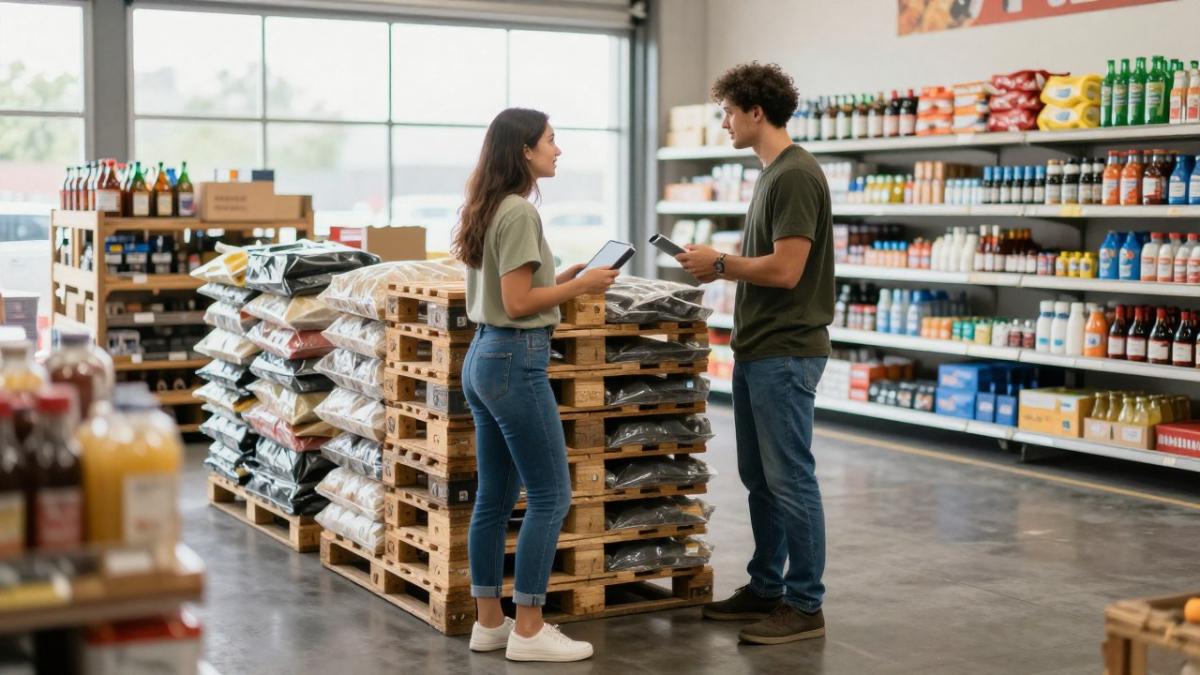
Avoid quiet side streets, empty warehouses, and private homes for the first trade. Meet during business hours so help is close if you need it.
Good meetup spots:
- Large retail store parking lots during the day
- Well-lit areas near entrances or staffed counters
- Spots with clear sightlines and open space to load
Skip these spots:
- Dark or isolated lots
- Private homes or garages for a first trade
- Places where you would need to walk far from your vehicle
Confirming Details Before You Leave Home
Confirm every detail in writing before the meetup. For a deeper walkthrough of matching, agreeing terms, and coordinating the exchange, see coordinating local inventory exchanges safely. Text or email works well, and it gives you a record if plans change.
Your confirmation message should cover five things: the date and time, the exact meetup spot (including which entrance or lot section), the pallet part details on both sides, who is bringing what, and what happens if someone is late or cannot make it. A short template helps:
"Hi [name], confirming our pallet part exchange on [date] at [time] at [location, including entrance/lot section]. I'll bring [part number, quantity, condition]. You're bringing [part number, quantity, condition]. We'll inspect both before trading. If you're running more than 15 minutes late, text me, otherwise I'll assume we're rescheduling. Message me if anything changes."
A few specifics make this confirmation actually useful:
- Name the part precisely. Use the part number, size, and model, not just "the box part." Pallet sets often have near-identical pieces, and a vague description is how mismatches happen.
- State condition in words. "Good used condition, one cracked board on the left stringer" is better than "good condition." It sets expectations before anyone drives out.
- Agree on the trade terms. Confirm whether this is a straight swap, a swap plus a top-up, or a one-way sale. If money is involved, agree on the amount and method in the same message so there is no haggling in the parking lot.
- Set a cutoff time. Many no-shows happen because plans were vague. Agree that if one side is more than 15-20 minutes late without a message, the other can leave.
- Share a backup contact. Exchange phone numbers and agree on a backup way to reach each other, such as a messaging app, in case one phone dies.
Watch out: confirming only the time and place, and leaving the part details and trade terms to the meetup, is the most common way a friendly swap turns into a disagreement in the parking lot.
Keep the confirmation thread until the trade is complete. If a dispute comes up later, the written record of what was agreed is your best protection.
Before the meetup, the article recommends confirming these details in writing so both sides know what to expect.
| Detail to confirm | What to specify | Why it matters |
|---|---|---|
| Date and time | Exact day and time | Prevents confusion about when to arrive |
| Meetup spot | Entrance or lot section | Avoids searching a large parking lot |
| Part details | Part number, size, model | Stops mismatched pallet pieces |
| Condition | Describe flaws in words | Sets expectations before driving out |
| Trade terms | Swap, top-up, or sale | Avoids haggling at the meetup |
| Late cutoff | 15-20 minutes | Clarifies when the other side may leave |
| Backup contact | Messaging app or second number | Covers a dead phone battery |
Pallet Inspection Checklist for the Meetup
Inspect the pallet before you accept it. Do this in daylight, on a flat and stable surface, and with the pallet empty or lightly loaded so you can see the structure. For individual resellers trading pallet parts, the inspection has two jobs: confirm the piece is what was promised, and confirm it is safe to lift, load, and stack.
Work through the pallet in a set order so you do not miss anything:
1. Identify the pallet type and size.
- Confirm the pallet style (for example, a standard stringer pallet or a block pallet) and the dimensions match the listing.
- Check the part number or marking if the piece is a specific set component.
- Confirm the quantity on hand matches what was agreed.
2. Check the deck boards.
- Look for cracked, split, or broken boards on the top deck.
- Check the bottom deck too, since hidden damage there affects how the pallet sits and stacks.
- Look for boards that are loose, lifted, or missing entirely.
3. Check the stringers and blocks.
- On a stringer pallet, run your hand along each stringer and look for splits, especially near the notches.
- On a block pallet, check each block for cracks, crushing, or separation from the deck.
- Press down on each corner and listen for creaks or movement that suggest a loose joint.
4. Check fasteners.
- Look for loose, missing, or protruding nails and fasteners.
- Check that staples and nails are not backing out where they could catch a hand or tear a load.
5. Check for contamination and pests.
- Look for stains, mold, mildew, or signs of pests such as frass or gnaw marks.
- Reject any pallet with active pest signs or heavy contamination, since it can spread to your other stock.
6. Check stability and load.
- Confirm the load is stable and not overhanging the pallet edges.
- Make sure the weight is centered and the stack is not leaning.
7. Confirm ownership and exchange terms.
- Ask whether the pallet is owned outright or is a returnable or pooled pallet that must go back to a supplier. Trading a returnable pallet you do not own can create a problem for both sides.
- Confirm in the same conversation whether the trade is final or whether either side can reverse it if the part does not fit the set.
Take photos of the pallet from several angles before loading, including close-ups of any damage you have agreed to accept. This protects both sides if a dispute comes up later.
Watch out: accepting a pallet because the top deck looks fine, without checking the stringers, blocks, and bottom deck, is how buyers end up with a piece that fails the first time it is stacked or lifted.
Verifying Items Before a Local Trade Is Final
Check the items before the trade is done. Compare the part numbers, condition, and quantity against what was agreed.
Do not hand over your side until you have seen the other pallet piece in person. To learn how to verify sellers and item condition before handing anything over, see inventory matching safety for resellers. Ask to see it, and match it against the listing details you confirmed in writing.
If something does not match, say so calmly and stop the trade. Walking away is always an option. A trade that feels wrong usually is.
For a deeper look at spotting problems and reducing risk, our guide on whether inventory matching is safe for resellers covers fraud signs and seller checks.
Lifting, Moving, and Loading Safely at the Exchange
Lift with your legs, not your back. Keep the load close to your body and avoid twisting while carrying it (Manual handling at work: Good handling technique).
Bring gloves and closed-toe shoes. If the pallet is heavy, ask the other seller to help you lift, or use a hand truck or dolly.
Slide or roll pallets when you can instead of dragging them across uneven ground. Tip the load slowly and keep your fingers clear of pinch points.
Before you start lifting:
- Confirm the pallet is stable and level
- Agree on who lifts and who guides
- Clear the path to your vehicle
- Use gloves and proper footwear
Your In-Person Exchange Safety Checklist and Next Step
Before you meet, run through this list:
- ☐ Meetup spot is public, lit, and during business hours
- ☐ Details confirmed in writing
- ☐ Pallet inspected and photographed
- ☐ Items verified against the agreed listing
- ☐ Lifting plan and gloves ready
- ☐ A trusted person knows your plans
If you are ready to find a trade partner, start by searching Find The Other Box for matching box parts.
Finding the last piece of a set should not feel risky. Find The Other Box connects resellers who need matching box parts, so you can plan your trade with confidence. Start Matching For Free
Frequently Asked Questions
Where is the safest place to meet for a local pallet part exchange?
A busy, well-lit public location is the safest choice. Many resellers pick the parking lot of a large retail store or a police station lobby during daytime or business hours. Avoid isolated warehouses, empty lots, or a seller's home. Choose a spot with room to park a vehicle and set down a pallet on level ground, and let someone know where you are going and when you expect to be finished.
What should resellers confirm before meeting to exchange pallet parts?
Confirm the meetup time, the exact location, the item description, the number of boxes or units, and the condition of each pallet. Agree on who is bringing what, such as a dolly, straps, or gloves. Settle any payment or exchange terms in writing before anyone leaves home. A short written confirmation protects both sides if one person later disputes what was agreed or a no-show happens.
How can you verify that pallet parts match before arranging an exchange?
Ask for clear photos of the labels, box numbers such as 'Box 1 of 2', model numbers, and any visible damage before you agree to trade. Compare the photos to your own item list. Matching the box count and part identifiers in advance reduces wasted trips. Confirm again on the day that the items on site match what was described.
Should both resellers bring someone to an in-person exchange?
Bringing a second person is a sensible precaution, especially for heavier pallets or unfamiliar meetups. A partner can help with lifting, watch the vehicle, and act as a witness if questions come up later. If you cannot bring someone, tell a friend or family member your location, the expected end time, and the other reseller's name before you leave.