How to Coordinate Local Inventory Exchanges Safely
By Editorial Team ·
On this page
- What a Local Inventory Exchange Looks Like for Individual Resellers
- Finding Resellers Who Hold the Pieces You Need
- Agreeing on Terms and Valuation Before You Meet
- Building an Inventory Exchange Safety Checklist for Meetups
- Verifying Item Condition and Count at the Handoff
- How to Monetize Incomplete Product Sets Through Exchanges
- Resolving Disputes and Documenting Every Exchange
- Scheduling Your First Local Exchange With a Matched Partner
- Frequently Asked Questions
Last Updated: November 4, 2026
Quick Summary
Local inventory exchanges are in-person swaps between two individual resellers, each holding a piece the other needs to complete a set. To coordinate one, list the exact item and set number you need, qualify a partner with specific questions and photos, agree on terms in writing, then meet in a public place to count and check everything together.
- Describe your missing piece with the product name, set number, condition, and area you can travel to.
- Qualify partners by confirming they have the exact piece and count, its condition, and whether they accept a swap or cash difference.
- Agree on items, counts, value, cash difference, meeting details, and missing-item rules in writing before meeting.
- Meet in a public, well-lit place with cameras, bring a friend, and share your live location with a trusted contact.
- Count and inspect every piece together, then photograph each box, the count, and the labels before anyone leaves.
Coordinating a local inventory exchanges effort means meeting another reseller in person to swap pieces, so each of you can finish a set you could not complete alone. Find The Other Box is built to help resellers find partners for incomplete sets. Below, you will find how these exchanges usually work, how to find a partner, what to agree on before you meet, and how to keep the handoff safe and documented.
What a Local Inventory Exchange Looks Like for Individual Resellers
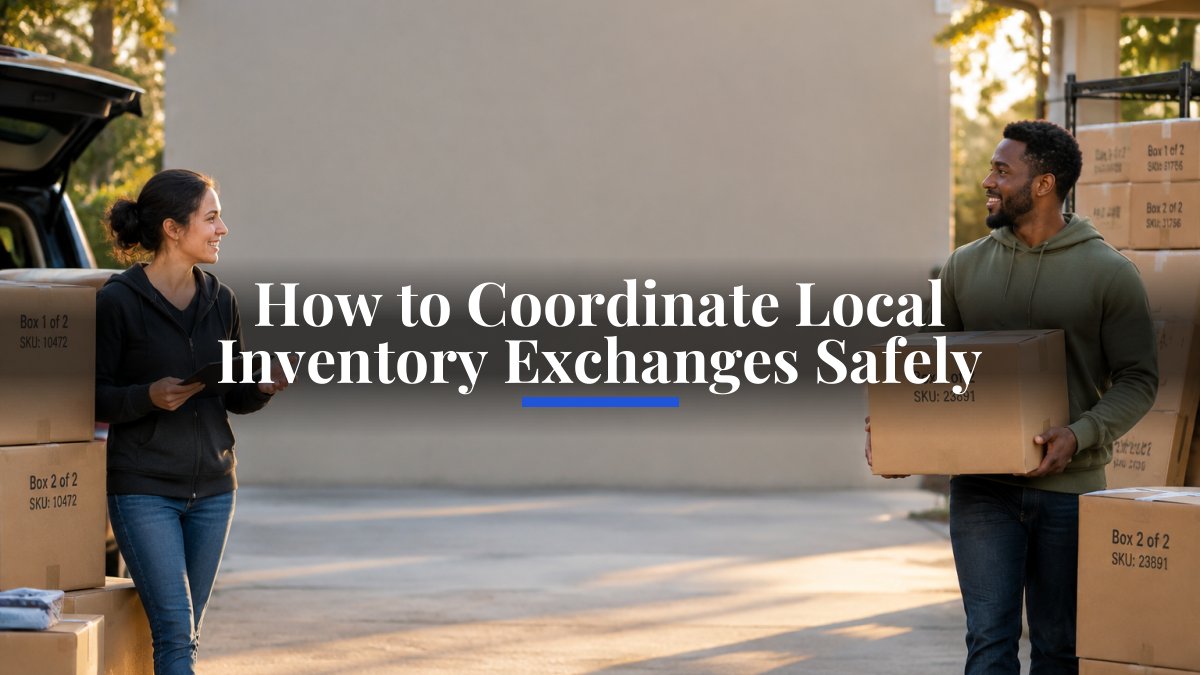
Local inventory exchanges are simple deals between two individual resellers. One person has a box or item the other needs, and they agree to meet nearby to swap or sell it.
Most exchanges are small. A reseller may hold "Box 1 of 2" from a return pallet, while another holds "Box 2 of 2." Neither box sells well alone, but together they make a complete set that can be sold for more.
A typical exchange follows a few steps:
- Confirm both sides have the matching pieces
- Agree on the terms and a fair value
- Pick a safe, public meeting spot
- Check the items and counts together
- Record the exchange in writing
Because these deals happen in person, the details matter. A short, clear plan keeps both sides protected.
Finding Resellers Who Hold the Pieces You Need
The hardest part of an exchange is finding a partner who has the piece you are missing. Start by listing the exact item, set number, and condition you need. Vague requests like "any toy box" rarely lead to a match. The more precise your listing, the fewer dead-end messages you will send.
A useful way to think about it is to describe your missing piece the same way you would describe it to a buyer, then search for that exact description in local reseller channels. Matches often come from one side recognizing their own partial set in the other person's request.
Good places to look include:
- Marketplace listings that show partial sets, especially those with photos of the box label
- Local reseller groups and community boards where pallet buyers trade
- Matching platforms built for incomplete sets, like Find The Other Box
- Local swap meets and reseller meetups where people bring partial boxes
When you reach out, include the product name, the set number (for example, "Box 2 of 3"), the approximate condition, and the area you can travel to. Add a photo of the box label and the contents laid out. This saves time for both sides and signals that you are a serious trader.
Qualify the partner before you commit to a meetup. Ask three quick questions: Do you have the exact piece and count? What condition is it in? Are you open to a straight swap or a cash difference? If the answers are vague, move on. Reliable partners often answer with specifics and photos in the first reply.
It helps to message only a few serious partners at a time. Quick replies and clear details usually signal a reliable trader. Keep a simple log of who you contacted, what they have, and where they are located so you do not lose track when several conversations run at once.
Watch out: a partner who refuses to send a photo of the actual item, or who pressures you to meet before confirming the set number, is usually not worth the trip.
Agreeing on Terms and Valuation Before You Meet
Before anyone drives anywhere, agree on the deal in writing. This can be a simple text or email, but it should cover the basics.
Your agreement should include:
- The exact items and counts each person is giving and receiving
- The agreed value, or whether it is a straight swap
- Who pays any cash difference, and how
- The meeting date, time and place
- What happens if an item is missing or damaged
To value a partial set, look at what a complete set sells for, then subtract the cost of the missing piece and a fair share of effort. Both sides should agree on that number before the meeting.
Watch out: never agree to a cash difference you have not confirmed in writing. Verbal promises are the most common source of disputes after a swap.
Before meeting, the article suggests covering these points in writing so both sides know the deal.
| Term | What to agree on | Why it matters |
|---|---|---|
| Items and counts | Exact pieces each person gives and receives | Prevents mismatched sets |
| Value | Agreed value or straight swap | Avoids disputes over worth |
| Cash difference | Who pays it and how | Verbal promises cause disputes |
| Meeting details | Date, time and place | Keeps the handoff organised |
| Missing or damaged items | What happens if something is wrong | Sets a fix in advance |
Building an Inventory Exchange Safety Checklist for Meetups
Meeting a stranger to trade goods carries real risk, so a checklist keeps you consistent every time. Use this list before each exchange:
- ☐ Meet in a public, well-lit place with cameras, such as a store parking lot
- ☐ Bring a friend or tell someone your plan
- ☐ Share your live location with a trusted contact
- ☐ Confirm the other person's name and profile before you leave home
- ☐ Bring a scale or tape measure to check box size and weight
- ☐ Carry your written terms printed or saved on your phone
- ☐ Keep payment methods traceable, and avoid cash when you can
- ☐ Leave if the terms change at the last minute
Following these steps will not remove every risk, but it makes most problems easy to spot early.
Verifying Item Condition and Count at the Handoff
Once you meet, check everything before you hand anything over. Open the boxes or lay the items out, then count them against your written terms. Do this together, side by side, so both of you see the same thing at the same time.
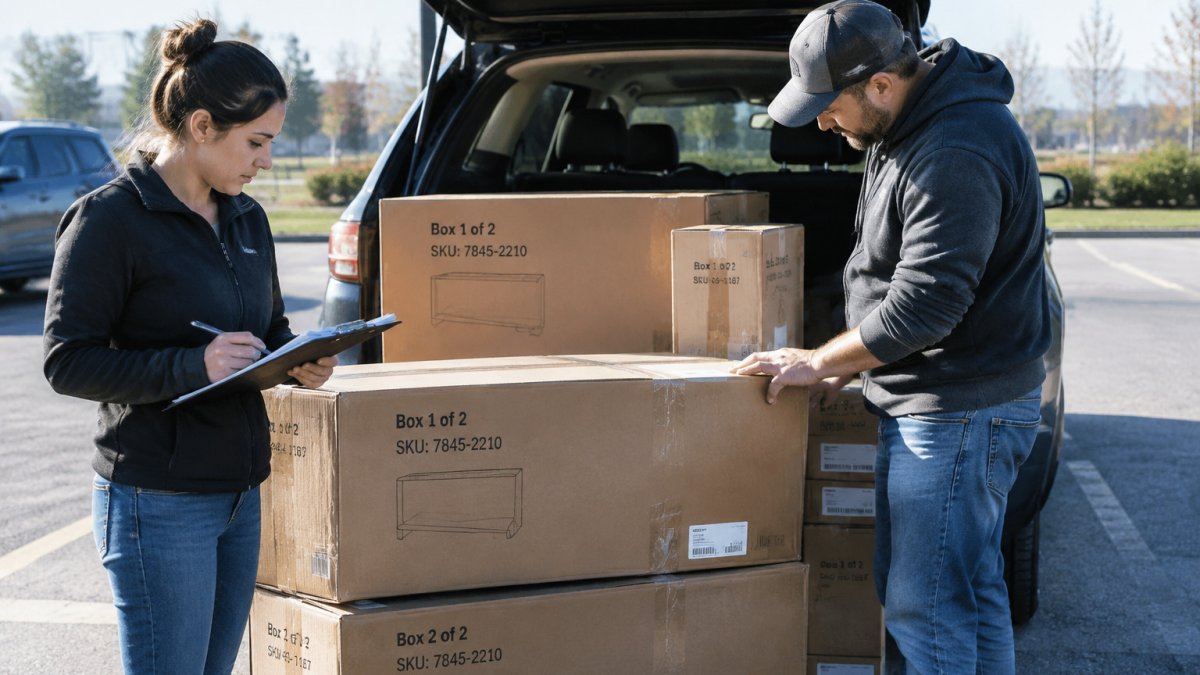
A practical handoff runs in four passes:
- Confirm identity and terms. Match the person to their profile name and read the written terms aloud together.
- Count the pieces. Lay every item out and count against the set number and your written list.
- Inspect condition. Check each piece for visible damage, dents, water marks, missing packaging, or inserts that affect value.
- Record the result. Take clear photos of each box, the full count, and the box labels before either person leaves.
Look for:
- The correct number of pieces and matching set labels
- Visible damage, dents, or water marks
- Missing packaging or inserts that affect value
- Matching serial or lot numbers where they apply
Ask the other person to take the same photos. These photos become your proof if a question comes up later. Having both sides photograph the same layout from the same angle makes later comparison easy.
If something does not match, stop the handoff before anything changes hands. Point to the specific line in your written terms, show the photo or count, and agree on a fix on the spot: swap the missing piece, adjust the cash difference, or walk away. Do not take the item home "to sort it out later."
Watch out: a partner who rushes the count, keeps the box closed, or asks you to hand over your item before the check is finished is a warning sign.
How to Monetize Incomplete Product Sets Through Exchanges
An incomplete set is often worth little on its own. Once it is completed, the value can rise sharply. That is the real reason resellers trade.
To make the most of an exchange:
- Price your partial set honestly so it is easy to match
- Grade each box's condition so partners know what to expect
- Trade only when the completed set will sell for more than the combined cost
- Track which sets sell fastest in your area
Some resellers use exchanges to clear storage space. Others focus on building full sets for higher-value listings. Either way, a clear plan keeps your margins intact.
Resolving Disputes and Documenting Every Exchange
Even careful trades can go wrong. A box may be lighter than expected, or the count may not match. Handle disputes calmly and rely on your written record.
Steps to follow:
- Pull up the written terms and your photos
- Contact the other person within a day and describe the issue clearly
- Propose a fair fix, such as a refund, a partial credit, or returning the item
- If you cannot agree, stop contact and seek help from the marketplace or a local reseller group
Keep records for every exchange, including messages, photos, receipts and the final agreement. Good records protect you and make future trades faster.
Scheduling Your First Local Exchange With a Matched Partner
Your first exchange should be simple. Choose a partner with a clear, low-value set so the stakes stay small while you learn the process.
Here is a practical plan:
- Confirm the match and agree on terms in writing
- Pick a date within the next few days
- Choose a public meeting spot near both of you
- Run through your safety checklist the day before
- Complete the handoff, check counts, and record everything
After your first trade, note what worked and what to change. The second exchange is often easier than the first.
Ready to find a partner for your incomplete sets? Start matching for free with Find The Other Box and see which pieces are waiting for you.
Frequently Asked Questions
How do I find other resellers to trade inventory with?
Start with marketplaces built for liquidation resellers, where you can list partial sets and search for the missing pieces you need. Local reseller groups and bin store owners also trade partial lots regularly. Before agreeing to anything, confirm the other seller's product listings match what they say they hold, and ask for photos of the exact item numbers or box labels. Clear, specific listings make matches faster and reduce wasted trips.
What are the safety best practices for meeting local resellers?
Meet in a public, well-lit location such as a busy store parking lot, and bring a second person if possible. Tell someone your meeting time and location, and avoid carrying cash you do not need. Inspect items before handing over payment, and keep the exchange short and documented. If something feels off about the other seller, decline the meetup and walk away.
How do I verify the condition of partial inventory before an exchange?
Ask for timestamped photos of every box, including the labels and any visible damage, before you agree to meet. At the handoff, open each box together, count the units against the agreed list, and check for missing parts or packaging defects. Record serial numbers or item codes where they exist. Taking your own photos during the check gives both parties a shared record if a question comes up later.
How do I document a local inventory exchange to prevent disputes?
Write down the item list, quantities, agreed value and meeting details in a short written agreement that both parties sign or confirm by message. Keep photos from the inspection and a note of who handed over what. Store these records with your inventory files for at least as long as you would keep a normal sales receipt. Clear documentation is the simplest way to settle a disagreement without escalating it.