How to Trade Missing Items Between Resellers?
By Editorial Team · · Updated
On this page
- Why Partial Pallet Sets End Up Stranded
- Finding a Reseller Inventory Matching Partner
- How to Value Partial Inventory Before You Agree to a Trade
- Agreeing on Terms Before You Meet
- Reseller Trade Checklist for the Day of the Exchange
- In-Person Inventory Exchange Checklist and Documentation
- Handling a Missing or Damaged Item After the Trade
- Start Matching Your Partial Sets on Find The Other Box
- Frequently Asked Questions
Last Updated: November 4, 2026
Quick Summary
To trade missing items between resellers, list the exact product and set piece you hold, find a partner through reseller groups, meetups, or Find The Other Box, and agree on a fair split based on the completed set's sold value. Confirm the terms in writing and meet in a public place to exchange, checking each item before you hand yours over.
- Write the product name, set size, and which piece you hold before reaching out.
- Value your piece by checking recent sold prices for the single item and the full set.
- Settle any value gap in cash, agreed in writing before the meetup.
- Take photos of each item and of both items together at the exchange.
- Check the other piece before handing over yours to avoid losing value.
Resellers buy pallets of returned or liquidation goods every week, and too many of them end up with a box that is only half of a set. Sold as a full lot, the pallet promised two boxes, but the second one never came. Learning how to trade missing items with another reseller can turn that stranded stock into sellable inventory. At Find The Other Box, we built a marketplace for exactly this problem. This guide shows how to trade missing items between resellers safely, from finding a match to handling a bad box after the exchange.
Why Partial Pallet Sets End Up Stranded
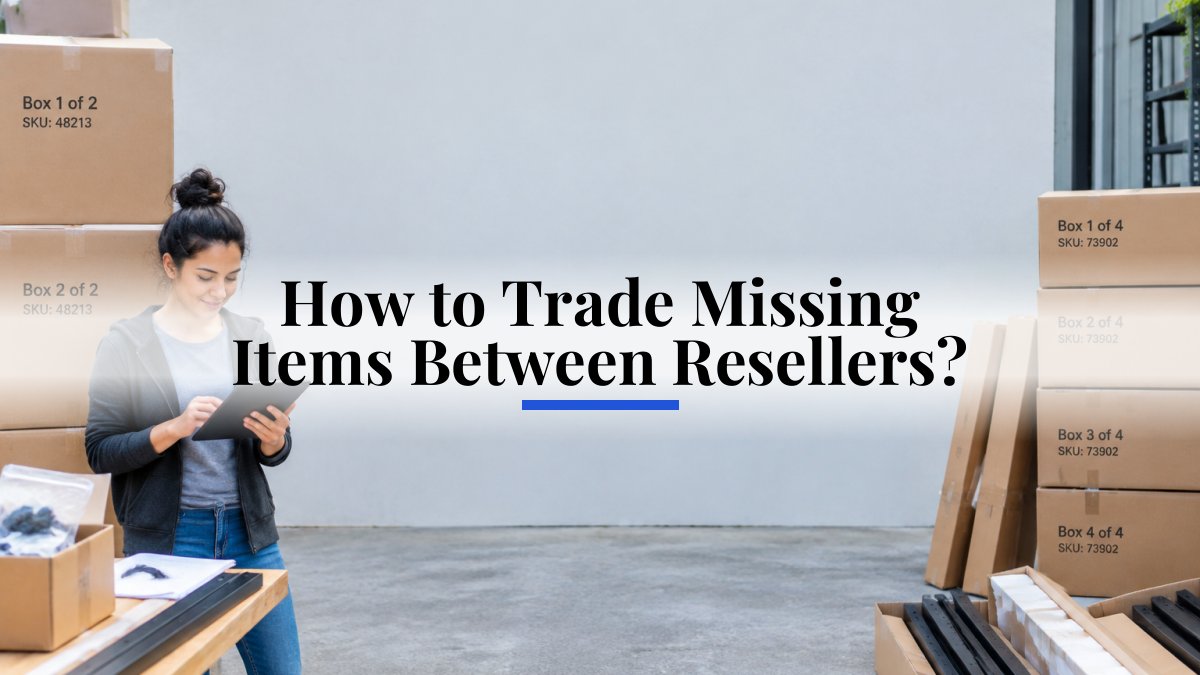
A partial set is a product that is missing a piece, such as box 2 of 3. Sellers often cannot list it at full value, and buyers do not want to pay for what they cannot use. The result is inventory that ties up space and cash.
Partial sets usually come from three places:
- Returned pallets where some items were never packed
- Liquidation lots that were broken up before sale
- Bulk purchases where one carton was lost or damaged in transit
The fix is not always to sell at a loss. A matching partner who holds the other piece can complete the set and turn both halves into profit.
Finding a Reseller Inventory Matching Partner
Start by listing exactly what you have. Write down the product name, the set size, and which piece you hold, such as "Box 1 of 2." Clear details make it faster to find someone with the other half.
Look for partners in these places:
- Reseller groups on social media and forums
- Local resale meetups and flea markets
- A dedicated inventory matching marketplace like Find The Other Box
When you reach out, share the same details you wrote down. A short, specific message gets more replies than a vague one. Compare the inventory matching tools for resale sellers if you want help searching for a trade partner.
How to Value Partial Inventory Before You Agree to a Trade
Before you agree to anything, work out what your piece is worth on its own. Our guide on recovering value from partial inventory walks through the estimate step by step. Check recent sold prices for the single item, then compare that to the full set price. Offer a fair split of the completed set's value, not the full retail price.
A practical way to do this is to build a simple value sheet for the trade. List the full set's recent sold price, then subtract the fees you would pay to sell it. From there, agree on a split that reflects who is contributing the harder-to-find piece.
When the two pieces are not equal in value, settle the difference in cash at the meetup. Agree on the amount in writing before you meet, and bring small bills so neither party has to find an ATM. If you prefer not to handle cash, use a peer-to-peer payment app and confirm the transfer on the spot before handing over your item.
Ask yourself these questions:
- Is the item in new or used condition?
- Does the other piece add more than half the set's value?
- How long would it take you to sell the partial set alone?
- Are there any missing accessories, manuals, or inserts that affect value?
Write your numbers down and share them with the other reseller. To judge whether the set can be completed, read about finding missing product components. A clear valuation keeps the trade fair and makes negotiation easier. Watch out: do not agree to a split based on retail price alone, because the completed set will likely sell for less than retail and both sides need to account for that difference.
The article's valuation steps can be scanned quickly, so here is a summary of the key considerations before agreeing on a split.
| Step | What to check | Why it matters |
|---|---|---|
| Single item value | Recent sold price for the one piece | Sets the baseline for your share |
| Full set value | Recent sold price of the complete set | Shows what the finished set can earn |
| Selling fees | Fees you would pay to sell the set | Reduces the net value to split |
| Condition | New or used, with photos | Affects what each piece is worth |
| Accessories | Manuals, inserts or missing parts | Can change the set's value |
| Cash difference | Gap between the two pieces' values | Settled in cash, agreed in writing |
Agreeing on Terms Before You Meet
Most trade problems start with unclear expectations. Settle the terms in writing before the exchange. Your message thread counts as a written record.
Cover these points:
- Exact items being traded, with set numbers
- Condition of each item, with photos
- Agreed value or split
- Meeting date, time, and location
- What happens if one item is missing or damaged
Keep the agreement simple. A few clear lines are enough, as long as both sides confirm them.
Reseller Trade Checklist for the Day of the Exchange
Bring everything you need so nothing slips through the cracks. Use this checklist:
- ☐ Your piece, packed as it will be handed over
- ☐ A printed or saved copy of the agreed terms
- ☐ Photos of each item taken before the trade
- ☐ A phone with the other reseller's contact details
- ☐ A bag or box for carrying the completed set
Meet in a public place with good lighting, such as a store parking lot during daytime. Avoid private homes unless you know the other person well.
In-Person Inventory Exchange Checklist and Documentation
Documentation protects both parties. Before you leave, confirm the exchange and record it.
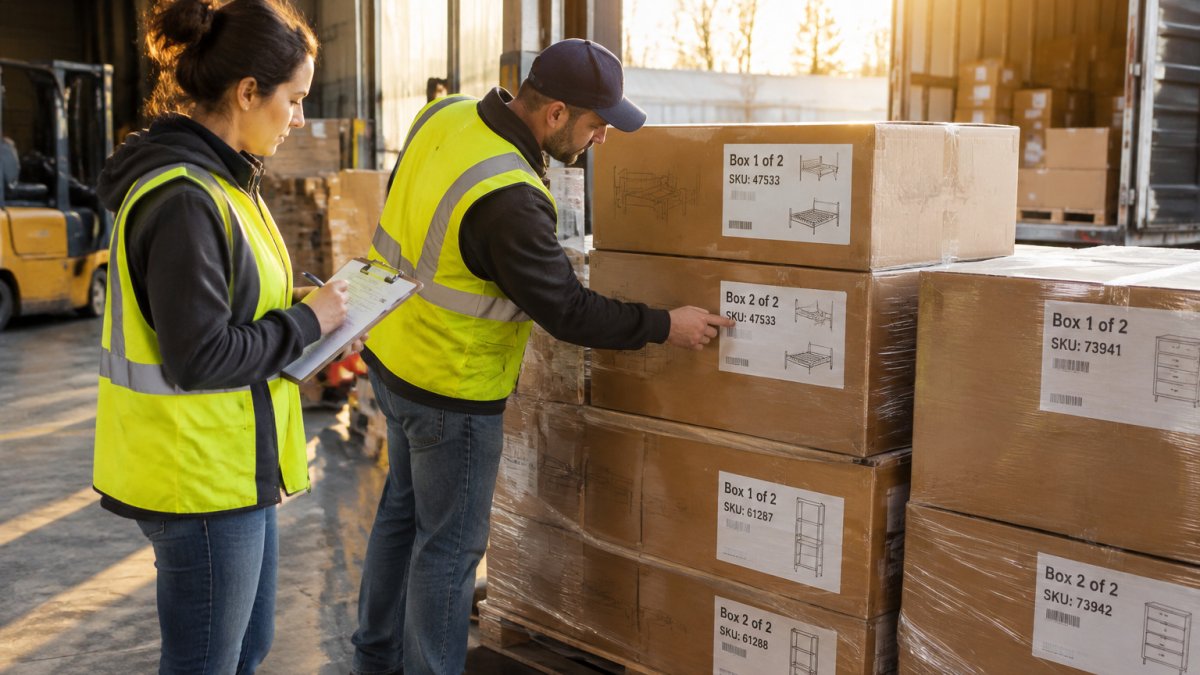
- ☐ Check each item against the agreed description
- ☐ Take a photo of both items together
- ☐ Sign or confirm the exchange in writing, even by text
- ☐ Save the photos and message thread in one folder
Good records help you settle any later dispute quickly. They also keep your inventory count accurate for taxes and bookkeeping.
Handling a Missing or Damaged Item After the Trade
Sometimes a piece turns out to be missing or damaged after you get home. Act fast. Our page on managing returns from matched inventory covers the follow-up steps in more detail. Message the other reseller right away with your photos and the agreed terms. Keep the message factual: state what you found, attach the photos you took at the meetup, and reference the specific line in your written agreement.
Follow this escalation path if the other reseller does not respond or disagrees:
- Send a second message with a clear deadline, such as 48 hours, to propose a resolution (a swap back, a partial cash adjustment, or a return of the item).
- If there is still no agreement, offer to meet again in the same public location to inspect the item together and settle it in person.
- If that fails, document everything in a single folder: the original listing or message thread, your pre-trade photos, the meetup photos, and any payment records. This record is what you would use if you need to escalate to a platform support channel or a local mediation service.
For in-person trades, the strongest evidence is a photo of both items together at the meetup, taken before either party leaves. Ask the other reseller to be in the photo or to confirm in a text that the photo is accurate. That single step resolves most disputes because it shows the condition and completeness of both pieces at the moment of exchange.
Watch out: do not hand over your piece until the other reseller has shown theirs and you have checked it. Trading first and checking later is a common way resellers lose value. If you discover a problem after the trade, avoid accusatory language and stick to the facts; a calm, documented approach is more likely to get a cooperative response.
Start Matching Your Partial Sets on Find The Other Box
Stranded partial sets do not have to sit in storage forever. Find The Other Box connects resellers who hold the missing pieces with those who need them, so you can complete sets and move inventory. You can start matching for free. Start matching for free and see who has the piece you need.
Frequently Asked Questions
How can resellers find the missing pieces needed to complete a product set?
Start by listing the exact model numbers, SKUs, or box labels (such as Box 2 of 3) that your partial set is missing. Then search marketplaces built for liquidation resellers, where users post partial inventory and the matching engine pairs sellers who hold the pieces you need. Post your own partial sets at the same time, since many partners are looking for exactly what you have. Keep your listings specific so matches are accurate and you avoid wasted trips to meet a partner whose items do not fit your set. Pricing depends on quantity and terms, so check Find The Other Box's website for current details.
How do you check that partial inventory matches before trading?
Before any exchange, compare the model number, size, color, and packaging label of each item against the list your partner sent. Ask for photos of the item and the box label, and confirm the count of units in each carton. Weigh or inspect items where the description is vague, and note any cosmetic damage in writing. A quick check at this stage prevents disputes later, because both parties agree on what was actually exchanged.
What should resellers agree on before meeting to exchange items?
Agree in writing on the exact items going each way, their condition, who covers any cost difference, the meeting location and time, and what happens if an item is missing or damaged. Decide how you will record the handoff, such as photos of each carton and signed item lists. Settle these points before you meet, not at the curb. A short written agreement, even a text message thread that both parties confirm, gives you something to refer to if the exchange goes wrong.
What should I do if an item is missing or damaged during an exchange?
Check every item against the agreed list before either party leaves the meeting point. If something is missing or damaged, record it on the signed item list with photos and tell the other reseller immediately, while you are still together if possible. If you cannot resolve it directly, refer back to the terms you agreed on in writing. Keep all messages and photos, since they are your evidence if the disagreement continues.