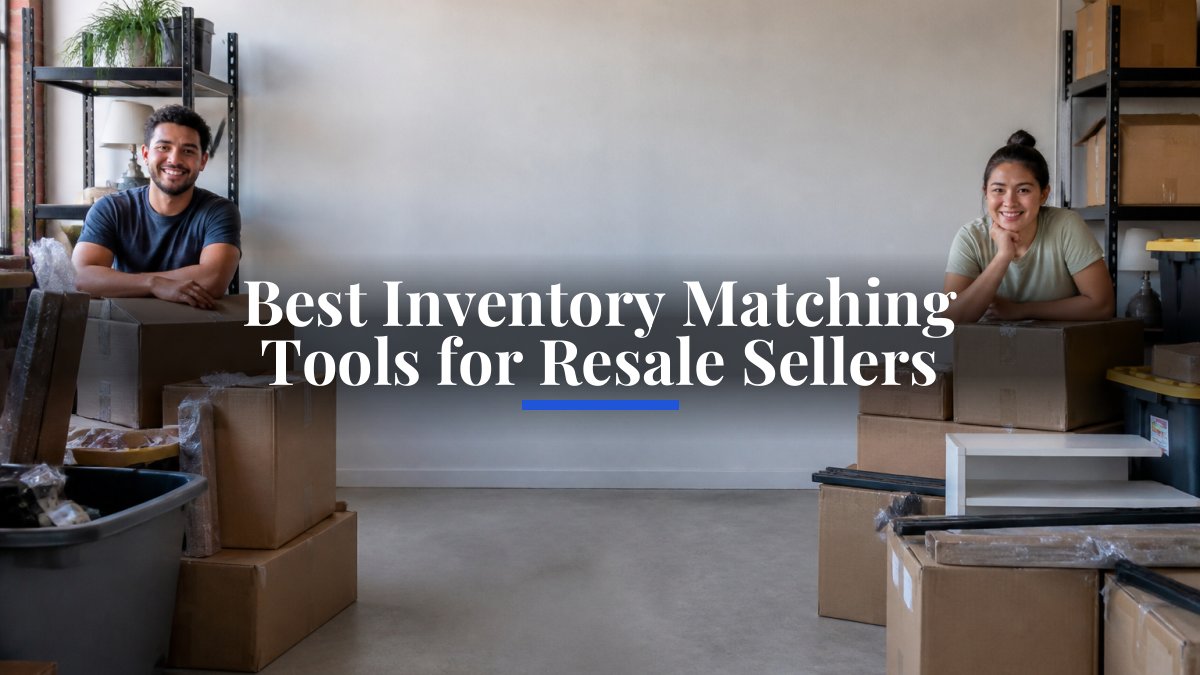
Best Inventory Matching Tools for Resale Sellers
By Editorial Team ·
On this page
- Why Incomplete Sets Stall Individual Pallet Resellers
- What Inventory Matching Tools Actually Do
- How Duplicate Detection and SKU Matching Work
- Comparing Matching Tools for Resale Sellers
- The four matching models you will encounter
- What to check before you commit
- Which tool fits which seller
- How matching actually works, and where it goes wrong
- Marketplace integrations and sync behavior
- How to Find Missing Inventory Pieces Locally
- Finding Local Liquidation Resellers to Trade With
- Pricing, Fees, and What a Match Really Costs You
- The pricing models you will see
- Calculating cost per completed set
- Hidden costs and fee-aware profitability
- Arranging a Safe In-Person Set Exchange
- Frequently Asked Questions
Last Updated: November 2, 2026
Quick Summary
Inventory matching tools are platforms that compare the items you hold against what other resellers need, then surface a potential partner for the exchange. For individual pallet buyers, the best choice depends on how the tool finds matches, whether it handles set and box numbering, and how many local resellers are active. Check cost per completed set, not just the listed fee.
- Identifier matching works best when SKU, UPC, or barcode data is clean and consistent.
- Set-and-box-number matching is built for individual pallet buyers completing partial sets.
- Standardize box labels like "Box 1 of 2" before importing to avoid missed matches.
- Evaluate cost per completed set, including travel and time, rather than the subscription price alone.
- Confirm box numbers, item count, and condition in writing, and photograph boxes at the exchange.
Individual pallet buyers often end up with a box missing its partner. Find The Other Box is built for that: a marketplace where resellers holding "Box 1 of 2" can find the holder of "Box 2 of 2" and complete the set. Choosing the right inventory matching tools comes down to how they find matches, what they cost, and whether they fit how you trade.
Why Incomplete Sets Stall Individual Pallet Resellers
A partial set is hard to sell on its own. Walk through five steps for reselling an incomplete set so the box stops sitting in storage.
The usual workaround is posting in local buy-and-sell groups or messaging other resellers directly.
A dedicated matching platform records what you hold and what you need in one place, turning a scattered search into a repeatable process.
What Inventory Matching Tools Actually Do
A matching tool compares the items you hold against the items other resellers are looking for. When the pieces line up, it surfaces a potential partner so you can arrange the exchange.
Good tools handle three jobs: they record your inventory with clear identifiers, search for complementary items, and flag likely duplicates so you do not chase the same match twice. Results depend heavily on how carefully item data is entered.
How Duplicate Detection and SKU Matching Work
Matching usually starts with an identifier such as a SKU, UPC, or barcode. When two listings share the same identifier and the box numbering is compatible, the tool can treat them as complementary pieces of one set.
Duplicate detection prevents the same box from being listed twice, which would create false matches. Inconsistent data, a missing SKU or a typo in the set count, causes missed matches, so clean entry is the biggest factor in whether a matching tool works for you.
Comparing Matching Tools for Resale Sellers
An individual pallet buyer needs a tool that does one job well. If your problem is a box missing its partner, the tool has to do one job: connect your partial set to another reseller holding the complementary piece, usually someone close enough to meet in person.
The four matching models you will encounter
Matching tools for resale generally fall into one of four models, and each behaves differently when you are trying to complete a set.
- Identifier matching (SKU, UPC, barcode). Compares the product identifier on your box against identifiers other sellers recorded. Most reliable when identifiers are clean, since two boxes from the same set share a product code even when box numbers differ. It breaks down with damaged labels, multiple codes for the same product, or retailer-internal SKUs.
- Set-and-box-number matching. Records that you hold "Box 1 of 2" for a specific set and searches for someone holding "Box 2 of 2" of the same set. This is the model built for individual pallet buyers, because it understands a set is incomplete by design. Accuracy depends on both sides entering the box count correctly.
- Keyword and title matching. Searches listing titles and descriptions for overlapping terms. Least precise because titles vary wildly, but it can surface matches identifier matching misses when labels are inconsistent.
Platforms that combine more than one of these methods can reduce false matches, which otherwise cost you time messaging the wrong people.
What to check before you commit
When you evaluate any matching tool, work through these points in order, ranked by how much they affect whether you actually complete a set.
- Match method. Does it check identifiers and box numbering, or only keywords? Ask whether it can distinguish "Box 1 of 2" from "Box 2 of 2" of the same set.
- Local reach. How many active resellers are near you, and do they trade in your category? A modest local base beats a large national one if you plan to meet in person.
- Duplicate handling. Does it prevent the same box from being listed twice and flag when two listings describe the same physical item?
- Data entry and import. Can you import existing inventory from a spreadsheet and export it later? Lock-in is a real risk.
- Trade facilitation. Does it help arrange a local exchange, or only show listings?
- Cost per completed set. Not the headline price, but what you pay each time a set gets completed.
Which tool fits which seller
Seller fit matters more than feature checklists. A casual seller with a handful of partial sets has different needs from someone moving pallet volume every month.
- Casual sellers (a few partial sets at a time). Prioritize free or low-cost access and local reach. Skip bulk import or multi-channel sync; a community-based option or free tier is usually enough if other resellers nearby are active.
- Regular individual pallet buyers (dozens of sets in rotation). Prioritize identifier matching, duplicate detection, and accurate box-number recording. You will feel data-entry friction weekly, so import and export matter. A platform built around set completion, like Find The Other Box, is designed to treat partial sets as its core unit.
- Multi-platform resellers. If you also list on general marketplaces, prioritize tools that keep quantities current across channels so a set does not sell twice. Confirm sync frequency and what happens when an item sells elsewhere.
Sellers commonly overbuy features they never use and underinvest in clean data entry. The best matching algorithm still fails if your records are inconsistent.
How matching actually works, and where it goes wrong
Matching is a comparison problem: the tool takes the identifiers and attributes you recorded, compares them against other sellers' records, and ranks potential complements.
Variants are the usual failure point. A set may ship in multiple colors or configurations, and box numbering may restart for each variant.
Watch out: if your records use inconsistent box labels, such as "1/2" in one entry and "Box 1 of 2" in another, the tool may treat them as different items and miss a real match.
Marketplace integrations and sync behavior
Some resellers also sell on general marketplaces, and a matching tool that connects to those channels can keep quantities current. The key questions are how often inventory syncs and what happens when a set sells on another channel.
The four matching models differ in how they find complementary pieces, so this table sums up what each one does best and where it falls short.
| Model | Best for | Key limitation |
|---|---|---|
| Identifier matching (SKU, UPC, barcode) | Clean, consistent product codes | Breaks with damaged labels or multiple codes |
| Set-and-box-number matching | Individual pallet buyers completing sets | Depends on both sides entering box counts correctly |
| Keyword and title matching | Inconsistent or varied listing labels | Least precise because titles vary widely |
| Manual or community matching | Active local reseller groups | Reach depends on community activity and region |
How to Find Missing Inventory Pieces Locally
Local matching is often faster than shipping, especially for individual buyers. Strategies for splitting and bundling mismatched sets show which items to pair once a missing piece turns up.
Start by searching your immediate area for resellers who handle similar lots. Note which sellers list the complementary box numbers you need. Then reach out with the exact box label, condition, and the set you are trying to complete.
Finding Local Liquidation Resellers to Trade With
Local liquidation resellers are a strong source of matches because they already move pallet inventory and often hold the partner pieces you need. Learn the local-connection approach to grade condition, price strategically, and find partners nearby.
Build a short list of trusted contacts over time. Repeat trading partners reduce the uncertainty of meeting a stranger and make future exchanges smoother.
Pricing, Fees, and What a Match Really Costs You
Headline pricing tells you almost nothing about whether a matching tool is worth it. What matters is the cost per completed set, and for individual pallet buyers that includes more than the subscription. Because most exchanges happen in person, your time and travel are part of the real cost, and a tool that produces faster local matches can be cheaper per set even when its listed price is higher.
The pricing models you will see
Matching and resale tools generally use one or more of these structures. Ask which applies before you compare anything else.
- Free tier with limits. Common for community-based matching. You can list a small number of items or matches per month. The limit is usually on active listings, not on messages, so check which one applies to you.
- Flat subscription. A recurring monthly or annual fee, often tiered by listing volume or number of active sets. This is the easiest to budget because the cost does not change with each match.
- Per-listing or per-match fee. You pay when you list an item or when a match is confirmed. This suits occasional sellers but becomes expensive at volume.
Pricing depends on quantity, dates, and delivery, so check Find The Other Box's website for current options or request a quote directly. The same applies to any platform you evaluate: confirm the current structure rather than relying on a review.
Calculating cost per completed set
Cost per completed set is the only comparison that matters for an individual pallet buyer. The formula is straightforward:
Cost per completed set = (subscription or listing fees + match fees + commissions + travel and time) ÷ number of sets completed
Work through it with your own numbers. If a tool charges a flat monthly fee and you complete two sets a month, the fee is divided by two.
Sellers commonly compare subscription prices in isolation, pick the cheaper plan, then abandon it after a month because matches were too far away or too slow. Factor in match quality and proximity, not just the fee.
Hidden costs and fee-aware profitability
Beyond the subscription, several costs affect whether a completed set is actually profitable.
- Marketplace fees on the eventual sale. If you complete a set and sell it on a general marketplace, the final value fee and payment processing fee come out of your margin. A set that looked profitable at completion can be thin after fees.
- Travel and meeting time. Fuel, parking, and the hour spent meeting are real costs. Batch exchanges when you can, meeting two partners in one trip if their locations allow it.
- Storage cost of the partial set. A box sitting in storage ties up cash and space. The longer it waits for a match, the more the holding cost eats into the eventual profit.
Track net profit per completed set, not gross sale price. Subtract the original cost of the partial box, the matching tool cost allocated to that set, travel, and any marketplace fees on the final sale.
Watch out: a tool that charges a commission on completed trades can quietly take a large share of a high-value set.
Arranging a Safe In-Person Set Exchange
Most local exchanges are straightforward, but a little preparation protects both sides. Find out whether inventory matching is safe and what precautions reduce the risk.
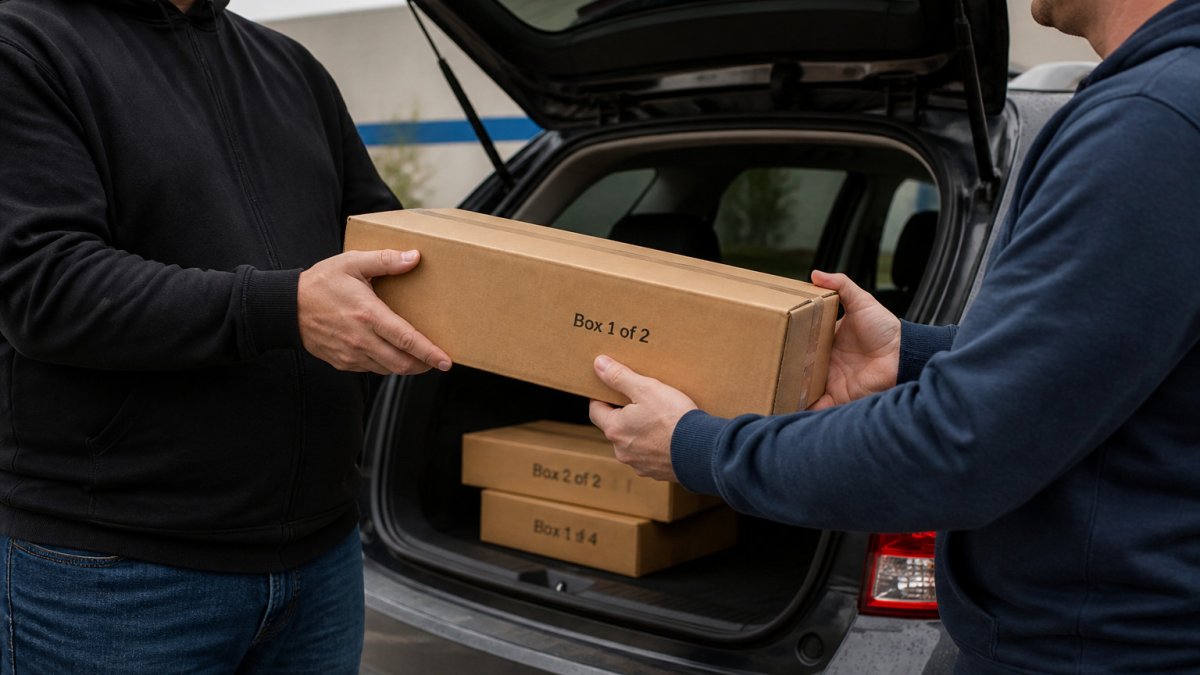
Before the meeting, confirm the box numbers, item count, and condition in a written message.
If a dispute arises, the written messages and photos are your best evidence. Managing returns with written agreements and photo documentation covers the full dispute-resolution steps.
Frequently Asked Questions
What are inventory matching tools for resale?
Inventory matching tools are systems that compare the items you hold against the items other resellers need, so partial sets can be paired up. They typically rely on SKU, barcode or product-identifier matching, plus duplicate detection to avoid listing the same piece twice. For individual pallet buyers, the most useful tools show you who has the piece you are missing and let you confirm the match before arranging a local pickup or meetup.
How can resellers find the missing pieces for an incomplete product set?
Start by recording the exact identifiers on the pieces you already have, such as SKU, model number or barcode, so you know precisely what is missing. Then search matching platforms, reseller groups and local buy-and-sell communities using those identifiers rather than general product names. Confirm that the missing item matches the condition and variant of your set before agreeing to any exchange.
What should resellers check before arranging an in-person inventory exchange?
Confirm the other reseller's identity and that the piece they hold matches your identifiers, ideally by asking for a photo of the barcode or label. Agree on the meeting location, a public and well-lit place where you can inspect items on the spot. Inspect both sides of the trade before handing anything over, and keep a written record of what was exchanged.
Where can resellers find local partners to complete inventory sets?
Local partners are often found through regional reseller groups, community boards and matching platforms that let you filter by location. Pricing and availability vary, so check current terms directly with Find The Other Box for an up-to-date view of how its matching works. Introduce yourself with the exact pieces you need before proposing a meetup.